
Exploring Venice
Ecoutez et lisez l’article
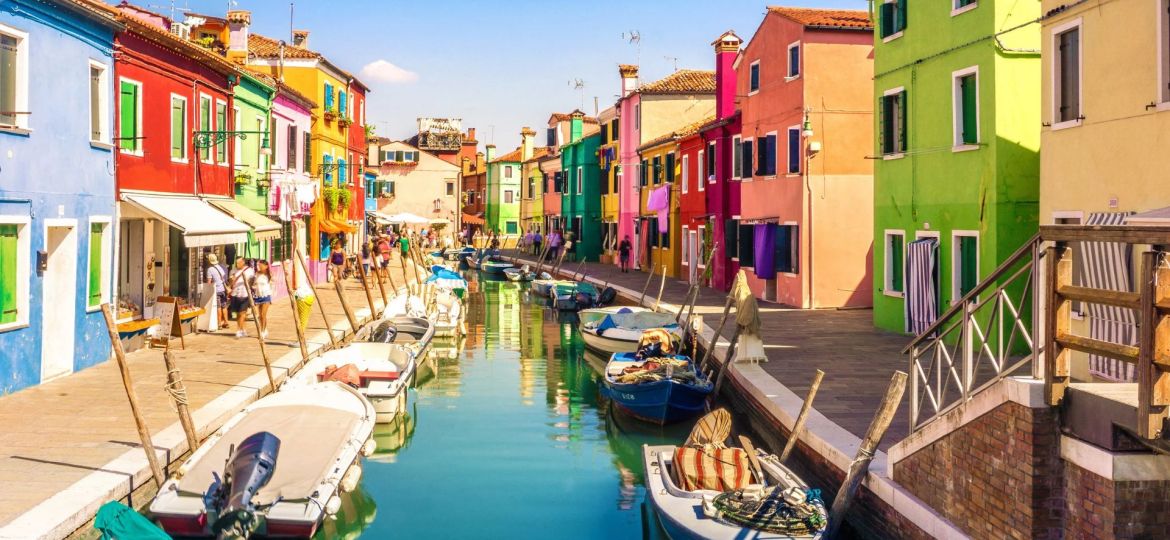
Venice is a beautiful city in the north of Italy. It is built on more than 100 small islands. There are no cars here! People walk or take a boat. Many streets are canals, and the biggest one is the Grand Canal. Visitors love a ride in a gondola, a long black boat. For a cheaper trip, you can use the water bus. Do not miss St Mark’s Square, with its famous church and tall bell tower. The old Rialto Bridge is also very popular. It is easy to get lost in the narrow streets, but that is part of the fun. In February, the city celebrates Carnival, and people wear beautiful masks. Near Venice, you can visit Murano, famous for its glass, and Burano, with its colourful houses. Try fresh seafood and a delicious Italian ice cream. People speak Italian. Venice is a magical place to explore and enjoy!
Vocabulaire important
- Bell tower — (nom) : Clocher. « Bell » = cloche, « tower » = tour. À Venise, on dit aussi « campanile ».
- Biggest — (adjectif, superlatif) : Le plus grand. Superlatif de « big » (big, bigger, biggest) : on double le « g ».
- Bridge — (nom) : Pont. Ex. : « cross a bridge » = traverser un pont.
- Built — (verbe, participe passé) : Construit. To build (build, built, built) — irrégulier. « Built on » = construit sur.
- Cheaper — (adjectif, comparatif) : Moins cher. Comparatif de « cheap » (bon marché). Contraire : « more expensive » (plus cher).
- Church — (nom) : Église. Sur la place Saint-Marc, c’est la célèbre basilique Saint-Marc.
- Get lost — (expression) : Se perdre. To get lost (get, got, got) — irrégulier. Attention : « Get lost! » tout seul est une façon impolie de dire « Va-t’en ! ».
- Glass — (nom) : Verre. Le matériau. « A glass » = un verre pour boire ; « glasses » = des lunettes.
- Islands — (nom) : Îles. Singulier : « island ». Le « s » ne se prononce pas : « aï-lând ».
- Miss — (verbe) : Manquer. To miss (miss, missed, missed) — régulier. « Do not miss… » = À ne pas manquer… ; « I miss you » = tu me manques.
- Narrow — (adjectif) : Étroit. Contraire : « wide » (large).
- Near — (préposition) : Près de. Synonyme : « close to ». Contraire : « far from » (loin de).
- Ride — (nom) : Balade. Un tour en bateau, à vélo ou en voiture. Existe aussi comme verbe : to ride (ride, rode, ridden).
- Seafood — (nom) : Fruits de mer. Indénombrable : jamais de « s ». « Fish » = poisson.
- Square — (nom) : Place. Faux ami : dans une ville, « square » désigne une place (« St Mark’s Square »). Le mot veut aussi dire « carré ».
- Streets — (nom) : Rues. Singulier : « street ». « Road » = route.
- Take — (verbe) : Prendre. To take (take, took, taken) — irrégulier. « Take a boat / a bus / a taxi » = prendre un bateau / un bus / un taxi.
- Trip — (nom) : Trajet. Un court déplacement. Ne pas confondre avec « travel » (le fait de voyager en général).
- Walk — (verbe) : Marcher. To walk (walk, walked, walked) — régulier. « Go for a walk » = aller se promener.
- Wear — (verbe) : Porter. To wear (wear, wore, worn) — irrégulier. Pour un vêtement ou un masque ; pour porter un objet lourd, on dit « carry ».